HIVEWORX LLC
A Packaging Insert That Evolved with the Business
CASE STUDY
A small baking business needed a way to keep its products in place inside boxes it already had. HIVEWORX LLC developed a set of inserts, then kept adapting the design as the packaging needs changed. The work eventually led to a different recommendation: a container that needed no separate insert at all.
Working with the boxes already available
The first challenge was straightforward. The boxes had no dividers, leaving room for the products to slide around. Suitable stock dividers were unavailable, while custom bulk orders were a poor fit for packaging the business was still trying out. Replacing the boxes would take too long for the immediate need.
HIVEWORX LLC designed lightweight, individual inserts to work with the available boxes. Several adjustments to size and fit led to a modular arrangement, with four separate pieces used in each box. The inserts supported the products and added some structure to the package.
That gave the business a way to use the boxes it had while learning what the packaging needed to do in practice.
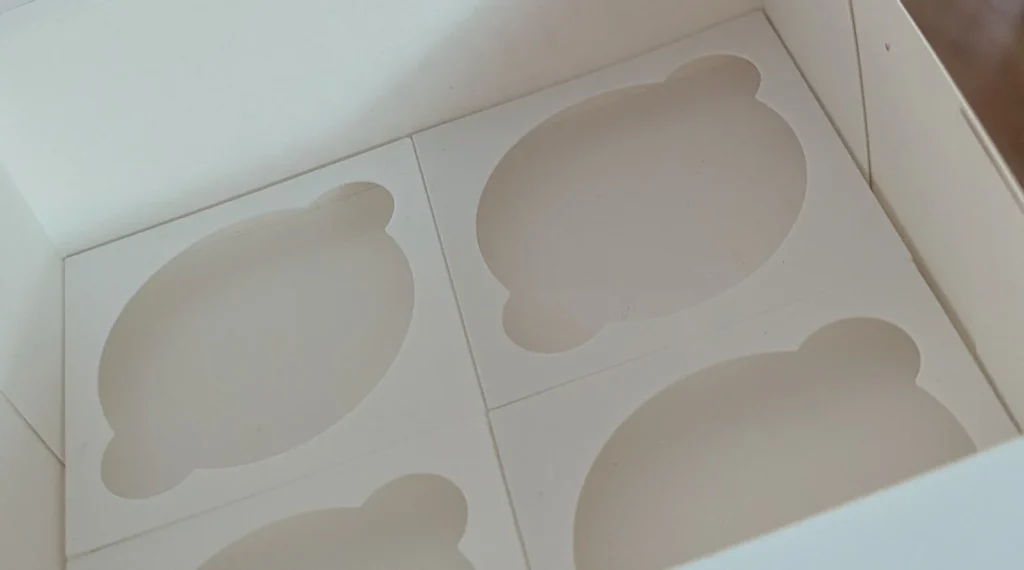
Adapting to a sturdier box
Repeated handling revealed another constraint: the original boxes needed more support. HIVEWORX LLC added reinforcement to the lid flaps across several batches. It helped, but the added work was too costly to sustain. A sturdier box became the next step.
The replacement introduced a different fit problem. Its listed internal dimensions were accurate, but the thicker lid flaps took up space when tucked inside. The existing inserts could go into the box, yet they prevented the lid from closing.
HIVEWORX LLC revised the insert fit to account for that occupied space. The change was a practical reminder that fitting inside an open box and working with the assembled package are different requirements.
Bringing four pieces together
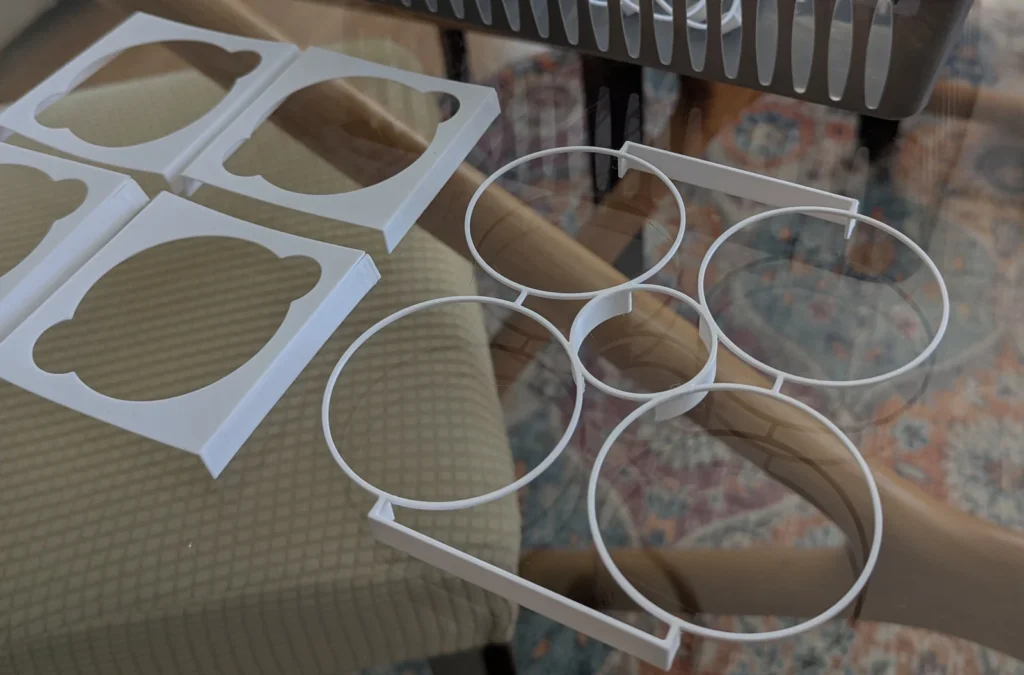
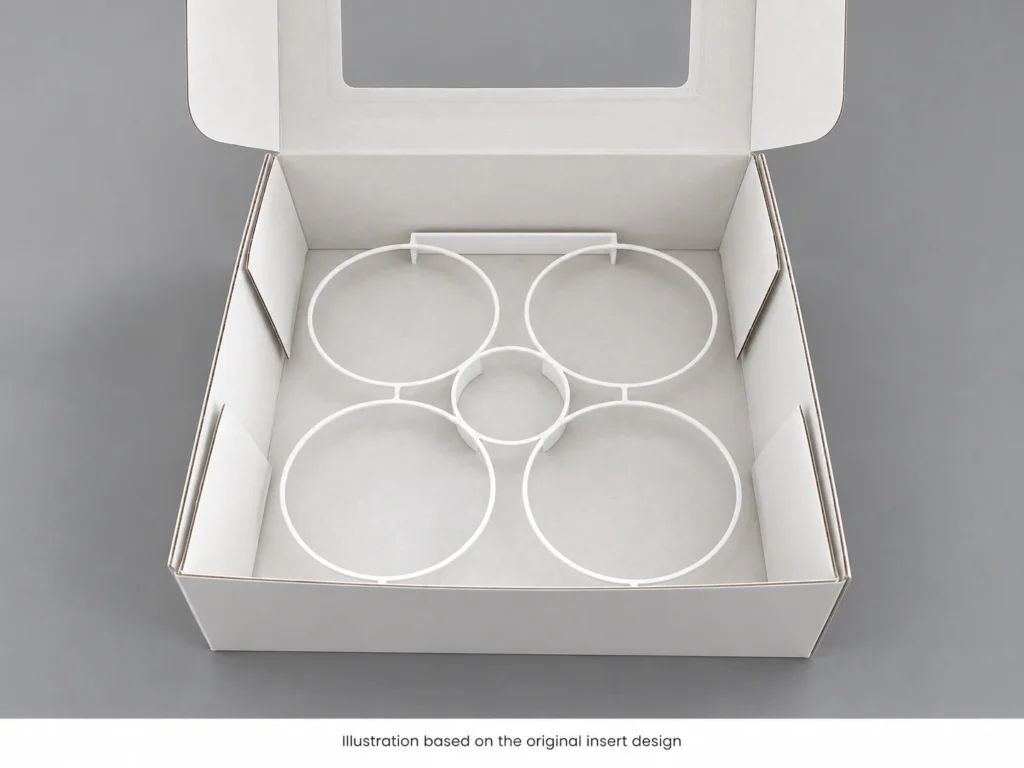
With the stronger box came higher packaging costs, prompting another look at the insert. HIVEWORX LLC replaced the four separate modules with a single connected piece that retained four product positions.
The connected layout brought the supports into one assembly. HIVEWORX LLC found that the revised design used less material, printed faster and made packing easier.
The insert remained in use while the business continued refining its labels and sealing. The design was serving an ongoing packaging need, with further changes guided by what happened during use.
A later change to the packaging itself
Over time, moisture became a concern for the coated cardstock packaging, which could absorb moisture and discolor or soften. Improving the insert could not resolve that packaging limitation.
HIVEWORX LLC recommended a move to plastic blister-style containers. The business adopted containers that held the products without a separate insert, and the change also simplified labeling.
The project had started with a way to make existing boxes work. It ended with a recommendation that removed the need for the part HIVEWORX LLC had been supplying.
Following the practical need
Each step answered a different constraint: availability, handling, closure, packing effort and the demands of continued use. Working alongside the business meant revisiting the whole package as those constraints changed.
For HIVEWORX LLC, the useful outcome was helping the business reach a simpler packaging arrangement. Sometimes that calls for another design revision. Sometimes it calls for a different container.